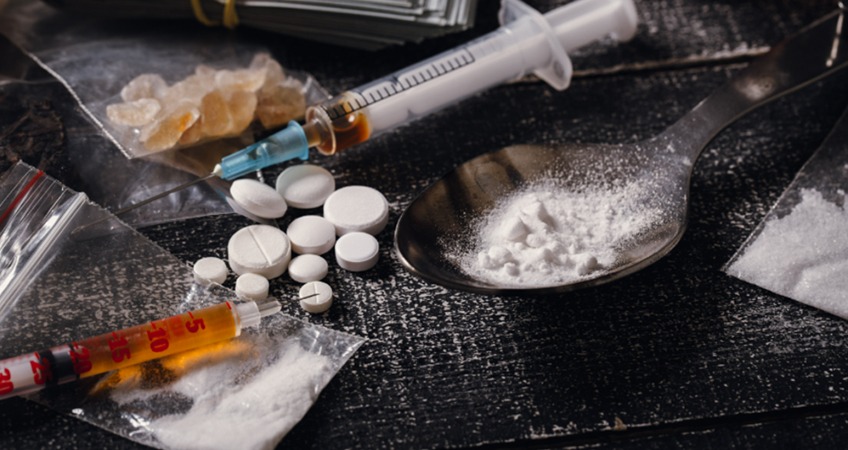
If you’re facing a drug charge in New South Wales, you may have heard the term “drug trafficking” used by police or in the media. It’s worth knowing upfront: NSW law has no standalone offence called drug trafficking. What people describe that way is prosecuted as drug supply under the Drug Misuse and Trafficking Act 1985 (NSW) — specifically, supply involving a commercial or large commercial quantity. The label matters less than the charge on the page in front of you, and that charge turns almost entirely on quantity.
Supply vs Possession
Possession means having drugs for your own use. Supply means providing, selling, or distributing them to someone else — and it doesn’t matter whether money changed hands. Giving drugs away for free still counts as supply.
There’s also a middle ground: if you’re found with more than a “traffickable quantity”, the law presumes you intended to supply it, even without direct evidence of a sale. This is known as deemed supply, and it’s a presumption your lawyer can challenge — for example, by pointing to a history of personal use, no scales or bags, and no unexplained cash.
Why Quantity Is Everything
Schedule 1 of the Act sets five weight bands for every listed drug — small, traffickable, indictable, commercial, and large commercial. Which band your case falls into decides the charge, the court, and the maximum sentence.
| Drug | Traffickable | Commercial | Large Commercial |
|---|---|---|---|
| Cannabis leaf | 300g | 25kg | 100kg |
| Cocaine | 3g | 250g | 1kg |
| Ice (methamphetamine) | 3g | 250g | 500g |
| MDMA | 3g | 250g | 1kg |
| Heroin | 3g | 250g | 1kg |
Note: Always check the current Schedule 1 figures with your lawyer, as amounts are periodically updated and cannabis (leaf, plant, resin, oil) has separate thresholds for each form.
Penalties Climb Sharply
- Commercial quantity supply: Up to 20 years’ imprisonment (15 years for cannabis leaf) and a substantial fine.
- Large commercial quantity supply: Up to life imprisonment (20 years for cannabis leaf).
- For non-cannabis drugs at these two levels, the law also sets standard non-parole periods — 10 years for commercial quantity and 15 years for large commercial — as a sentencing benchmark.
Bail Is Harder, Not Impossible
Commercial quantity supply is a “show cause” offence under the Bail Act 2013 (NSW). Instead of the prosecution having to justify keeping you in custody, you must show the court why your release is justified.
Factors that may strengthen a bail application include:
- Strong ties to the community.
- Stable accommodation.
- Steady employment.
- Reliable sureties.
- If refused in the Local Court, you may renew the application in the Supreme Court.
Common Defences
Every case is different, and possible defences depend on the facts. They may include:
- You didn’t know the drugs were there.
- You acted under duress or immediate threats.
- The drug weight was incorrectly calculated.
- The police search or arrest was unlawful.
- Rebutting deemed supply by proving the drugs were for personal use.
How the Case Moves Through Court
- Arrest and Bail Hearing
- First Mention in the Local Court
- Police Evidence Served
- Charge Certification
- Case Conference
- Committal to the District Court
- Formal Arraignment
- Trial or Sentencing Hearing
The process often takes more than a year, making early legal preparation essential.
Why Getting Advice Early Changes the Outcome
- Exercise your right to remain silent until you’ve received legal advice.
- A properly prepared bail application can significantly improve your chances of release.
- Early investigation may uncover unlawful searches or procedural errors.
- Negotiating a lower quantity category may reduce the potential sentence.
- Preparing references, treatment reports, and expert evidence early can strengthen sentencing submissions.
Our Experience
Harvard Defence Lawyers represents clients across the full range of NSW drug matters — from possession and low-level supply through to commercial and large commercial quantity prosecutions in the District Court, as well as Commonwealth importation and exportation charges under the Criminal Code Act 1995 (Cth).
If you’re under investigation or have been charged, contact our Sydney CBD, Blacktown, or Belmore/Liverpool offices for advice tailored to your situation.
Disclaimer: This is general information, not legal advice. Every matter depends on its own facts. Speak with us directly about your circumstances.