
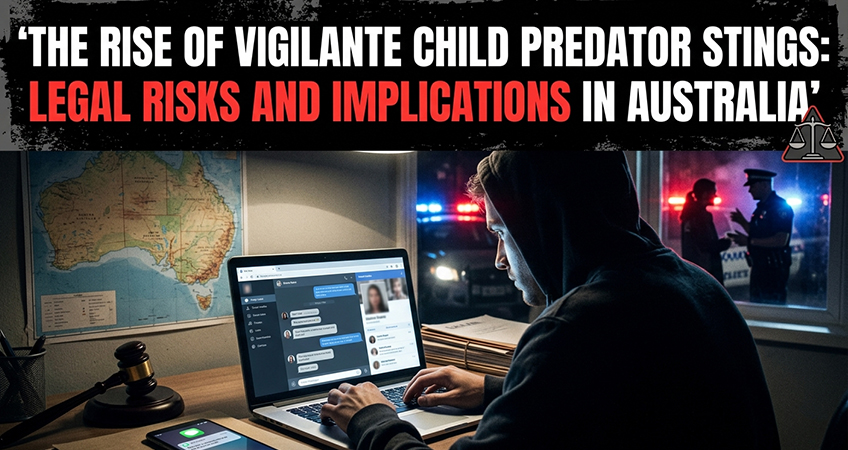
In recent years, a concerning trend has emerged across the globe, including in Australia: groups of self-styled “vigilantes”.
conducting covert operations to expose alleged child predators. While these individuals often claim to protect vulnerable children from harm, their actions raise serious legal and evidentiary concerns under Australian law—particularly in New South Wales and Tasmania.
In the UK, similar vigilante groups have attracted both public attention and controversy. Now, Australian courts, particularly in New South Wales, must consider the implications when evidence arises from these private investigations.
Under the New South Wales Evidence Act, evidence must be collected in accordance with legal standards to be admissible. Public Vigilante-gathered evidence, often obtained through entrapment (where an individual is lured into committing a crime), risks being excluded by the courts. Entrapment occurs when a person is induced by public citizens or unauthorised individuals to commit an offense they otherwise would not have contemplated.
In the landmark Tasmanian Supreme Court case of Tasmania v Wykes – [2019] TASSC 18, the court clarified that evidence procured through entrapment may be deemed inadmissible, regardless of the moral justification.
In all Australia jurisdictions it is recognised that private citizen actions must avoid interfering with police investigations. If vigilantes cross the line, not only can their evidence be excluded, but they themselves may face criminal charges, such as Stalking, Assault or even defamation if false accusations are made.
As Criminal Defence Lawyers, we urge the public to be cautious and to remember that justice is best served when due process is followed. While the desire to protect children is understandable and noble, private citizens do not have the same authority as law enforcement. If you have concerns about potential child exploitation, report them immediately to the police and allow trained officers to conduct a lawful investigation.